
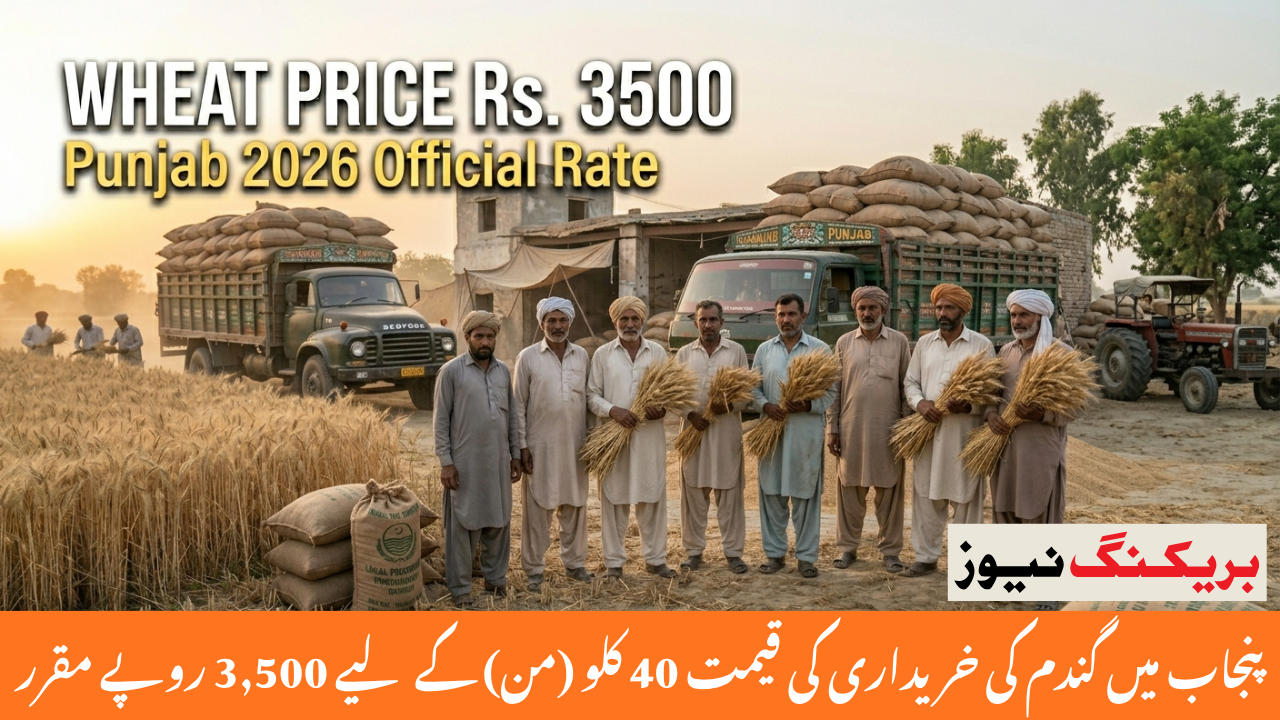
Punjab wheat procurement price 2026 has officially been set at around Rs. 3,500 per 40 kg (maund) by the government. This announcement plays a key role in determining wheat market stability, farmer income, and national food security. The procurement price acts as a benchmark for wheat buying by government agencies across Sindh, Khyber Pakhtunkhwa, and Balochistan.
The new rate is designed to support farmers while ensuring adequate wheat stock for the country’s food supply chain.
What is Punjab Wheat Procurement Price 2026?
Punjab wheat procurement price 2026 refers to the official rate at which government agencies purchase wheat directly from farmers during the harvest season. This system helps stabilize wheat markets and ensures that farmers receive a guaranteed minimum price.
At Rs. 3,500 per 40 kg, the government aims to:
- Support local wheat growers
- Maintain strategic wheat reserves
- Control flour (atta) price fluctuations
Why the Wheat Procurement Price Matters
Punjab wheat procurement price 2026 is important because wheat is a staple food for millions of households. Any change in its pricing directly affects:
- Farmer income
- Flour mill production costs
- Retail atta prices
- Overall inflation in food sector
A stable procurement price helps prevent sudden spikes in bread and flour costs.
Also Read: Pakistan Daily Load Shedding: 2–2.25 Hours Power Cuts During Peak Evening Hours
Impact on Farmers
For farmers, Punjab wheat procurement price 2026 provides a guaranteed support level. However, actual benefits depend on:
- How much wheat government agencies purchase
- Payment speed after procurement
- Transportation and storage costs
Many farmers rely on this price as a safety net, especially when market prices fluctuate.
WhatsApp Channel Link:
https://whatsapp.com/channel/0029Vb7drdQL2AU5NODWlX3U
Impact on Consumers
While the procurement price is mainly for farmers, it indirectly affects consumers. If procurement is smooth:
- Wheat supply remains stable
- Flour prices stay controlled
But if procurement slows or supply becomes tight:
- Flour prices may increase in local markets
- Inflation pressure may rise
Provincial Procurement System
In Pakistan wheat procurement price 2026 system:
- Punjab is the largest wheat procurement province
- Sindh also contributes significantly
- KPK and Balochistan have smaller procurement shares
Each province manages its own procurement centers and storage facilities.
Challenges in Wheat Procurement
Despite the set price, Punjab wheat procurement price 2026 system faces challenges:
- Delayed farmer payments
- Storage capacity limitations
- Transportation issues
- Weather impact on wheat quality
- Uneven procurement across regions
These challenges can affect overall wheat availability in markets.
Government Objectives
The government sets Punjab wheat procurement price 2026 to achieve:
- Food security for population
- Fair income for farmers
- Controlled inflation in food sector
- Stable wheat reserves for emergencies
Future Outlook
Experts suggest that Pakistan wheat procurement price 2026 may need adjustments in coming years due to:
- Rising input costs (fertilizer, diesel)
- Climate-related crop risks
- Increasing population demand
- Global wheat price fluctuations
Improved storage systems and faster procurement processes are also needed.
FAQ’s
1. What is Punjab wheat procurement price 2026?
It is the official punjab government rate set at Rs. 3,500 per 40 kg (maund) for buying wheat from farmers.
2. Why is procurement price important?
It ensures farmers receive a minimum guaranteed price and helps stabilize wheat supply.
3. Does procurement price affect flour prices?
Yes, indirectly. It influences wheat supply and production costs of flour mills.
4. Which province produces the most wheat?
Punjab is the largest wheat-producing and procurement province in Pakistan.
5. Can market wheat price be higher than procurement price?
Yes, open market prices often fluctuate and can be higher depending on demand.
Official Website:
Conclusion
Punjab wheat procurement price 2026 at Rs. 3,500 per 40 kg (maund) is an important policy decision aimed at supporting farmers and maintaining national wheat reserves. While it provides stability in theory, its success depends on efficient procurement, timely payments, and strong supply chain management. A balanced approach is essential to ensure both farmer protection and consumer affordability.
Disclaimer
This article is for informational purposes only. Wheat procurement prices and policies may change based on government updates. Readers should refer to official government sources for the most accurate and latest information.
Related posts:
 Rana Amir Latif Advocate Murder Sargodha – Lawyer Killed Inside Kachehri Chamber 2026
 Medicines Price Increase in Pakistan: Rising Costs and Public Health Concerns 2026
 Pakistan Daily Load Shedding: 2–2.25 Hours Power Cuts During Peak Evening Hours
 Pakistan Navy Anti-Ship Missile Test: Pakistan Navy Successfully Test-Fires Advanced Missile
1 thought on “Punjab Wheat Procurement Price 2026 Set at Rs. 3,500 per 40 kg (Maund)”