
Introduction
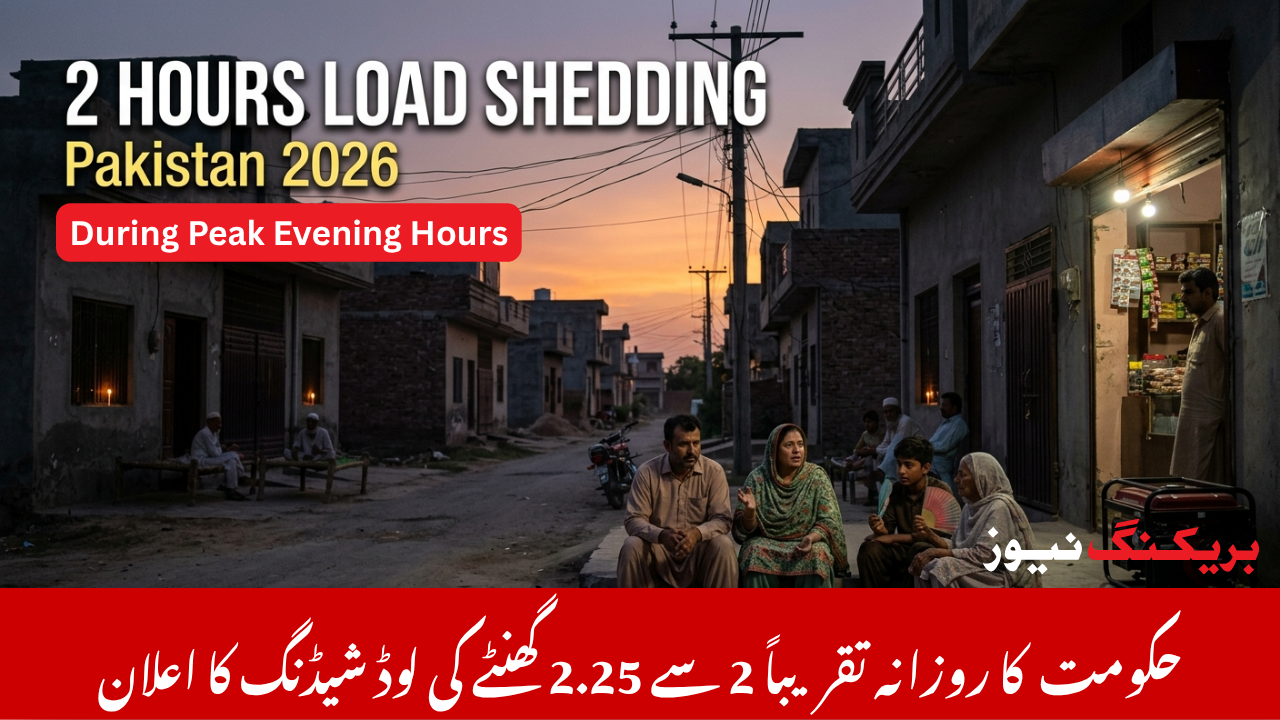
Pakistan daily load shedding has once again become a major concern as the government officially announces 2 to 2.25 hours of daily power outages during peak evening hours from 5:00 PM to 1:00 AM. This step is aimed at managing electricity demand, reducing pressure on the national grid, and controlling rising fuel costs.
Why Pakistan Daily Load Shedding Is Being Implemented
Pakistan daily load shedding is part of a broader strategy to balance electricity supply and demand. The country is currently facing a shortage of fuel required for power generation, especially imported liquefied natural gas (LNG).
Global market disruptions and rising fuel prices have made electricity production more expensive. Instead of increasing electricity tariffs immediately, the government has chosen scheduled outages as a temporary solution.
Impact of Pakistan Daily Load Shedding on Daily Life
Pakistan daily load shedding is affecting both households and businesses. Evening hours are crucial for families, as they rely on electricity for cooking, studying, and other daily activities. Power outages during this time create inconvenience and disruption.
For businesses, especially small shops and service providers, Pakistan daily load shedding can lead to reduced productivity and financial losses. Many are now investing in backup solutions such as generators or solar systems.
Hydropower Shortage and Energy Crisis
Another major factor behind Pakistan daily load shedding is the decline in hydropower generation. Due to lower water levels in reservoirs, electricity production from dams has dropped significantly.
This reduction has widened the gap between electricity supply and demand, making load shedding unavoidable during peak hours.
Government Measures to Manage Pakistan Daily Load Shedding
To control the situation, the government has directed power distribution companies to implement a proper schedule for Pakistan daily load shedding. The goal is to minimize unannounced outages and ensure fairness across different regions.
Authorities are also exploring options to increase fuel supply, including importing LNG from international markets. At the same time, there is a growing focus on promoting renewable energy sources.
Also Read: Faisalabad Weather in April: Daytime Temperatures Reach 38°C with Heat Spikes Above 40°C
Long-Term Solutions to Reduce Pakistan Daily Load Shedding
Pakistan daily load shedding highlights deeper structural issues in the energy sector. Long-term solutions include:
- Investing in renewable energy like solar and wind
- Improving power infrastructure
- Reducing dependence on imported fuels
- Encouraging energy conservation
These steps are essential to ensure a stable and sustainable electricity supply in the future.
WhatsApp Channel Link:
https://whatsapp.com/channel/0029Vb7drdQL2AU5NODWlX3U
Conclusion
Pakistan daily load shedding is a temporary but necessary measure to manage the country’s ongoing energy crisis. While it creates short-term inconvenience, it helps prevent larger issues such as massive blackouts or sharp increases in electricity prices. Long-term reforms and investments in alternative energy are crucial to permanently resolve the problem.
Disclaimer
This content is for informational purposes only. Load shedding schedules and government policies may change over time. Always refer to official sources for the latest updates.
Related posts:
 Rana Amir Latif Advocate Murder Sargodha – Lawyer Killed Inside Kachehri Chamber 2026
 Medicines Price Increase in Pakistan: Rising Costs and Public Health Concerns 2026
 Punjab Wheat Procurement Price 2026 Set at Rs. 3,500 per 40 kg (Maund)
 Pakistan Navy Anti-Ship Missile Test: Pakistan Navy Successfully Test-Fires Advanced Missile
1 thought on “Pakistan Daily Load Shedding: 2–2.25 Hours Power Cuts During Peak Evening Hours”