
Pakistan Oil Import Bill 800 Million Sparks Economic Concern in 2026
Introduction
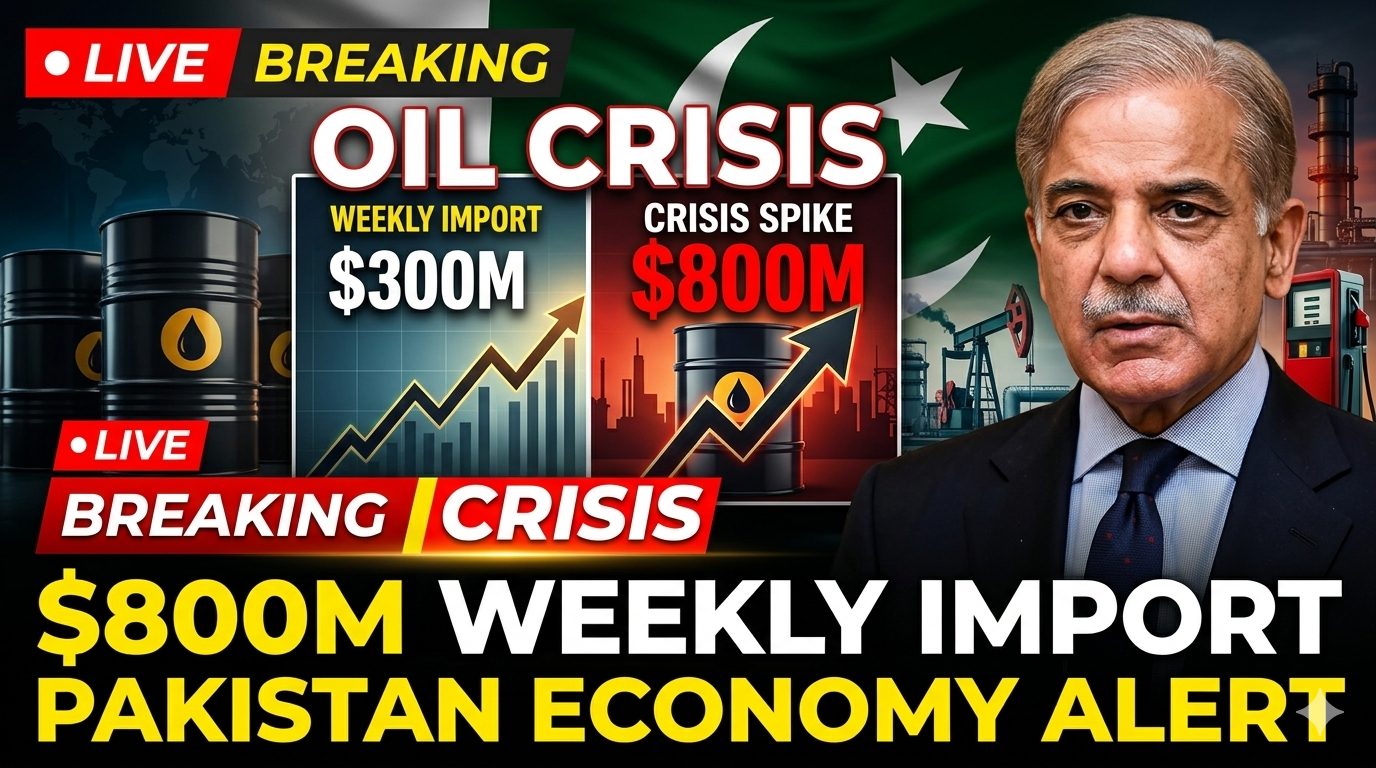
Pakistan oil import bill 800 million per week has become a major economic concern after Prime Minister Shehbaz Sharif confirmed a sharp increase from nearly $300 million before the Middle East conflict. This rise is driven by global oil price escalation and supply chain disruptions.
This sudden jump in this is adding pressure on inflation, currency stability, and national economic planning. Economists warn that sustained high energy costs may also slow down investment and reduce business confidence across key sectors such as manufacturing, transport, and agriculture.
Oil Import Cost Comparison
| Situation | Weekly Oil Import Bill | Key Reason |
|---|---|---|
| Before crisis | $300 million | Stable global oil prices |
| Current situation | $800 million | Middle East conflict + global oil price surge |
Why Pakistan Oil Import Bill 800 Million Increased
The rise in Pakistan oil import bill 800 million is linked to several global and domestic factors:
1. Global Oil Price Surge
International crude oil prices have increased due to supply shortages and geopolitical tensions.
2. Middle East Conflict Impact
The ongoing conflict has disrupted oil supply routes, increasing shipping and insurance costs.
3. Import Dependency
Pakistan’s heavy reliance on imported fuel has made this highly sensitive to global shocks.
4. Rising Domestic Demand
Increasing fuel consumption in transport and power generation sectors has also contributed to higher import requirements.
Economic Impact of Pakistan Oil Import Bill 800 Million
Inflation Rise
This increase raises transport and production costs, pushing inflation higher and affecting household purchasing power.
Currency Pressure
Higher import bills increase dollar demand, weakening the rupee and creating pressure on foreign reserves.
Industrial Costs
Manufacturing and logistics sectors are directly affected by the rising this, leading to higher product prices and reduced competitiveness in export markets.
Government Response
Authorities are working to manage the impact of this through:
- Negotiating oil supply agreements
- Expanding LNG imports
- Encouraging energy conservation
- Long-term energy diversification plans
- Exploring renewable energy investments to reduce dependency on imported fuel
Officials have also stressed improving efficiency in fuel consumption across public transport and industrial sectors.
Global Context
This rise is part of a wider global energy crisis affecting many developing economies due to:
- Geopolitical instability
- Supply chain disruptions
- Production limitations
Even developed economies are facing energy inflation, though they are better equipped with strategic reserves and diversified energy sources.
Future Outlook
If this trend continues, Pakistan may face:
- Higher inflation
- Currency depreciation
- Increased fiscal pressure
- Slower economic growth
- Greater dependence on external borrowing to manage import payments
However, any stabilization in global oil prices or successful diplomatic resolution of conflicts could significantly ease pressure on the economy in the coming months.
FAQs
1. What is Pakistan oil import bill 800 million?
It refers to Pakistan’s weekly oil import cost, which has risen to $800 million.
2. Why is Pakistan oil import bill 800 million increasing?
Due to global oil price hikes, Middle East conflict, and rising domestic demand.
3. What was the previous oil import cost?
Around $300 million per week.
4. How does Pakistan oil import bill 800 million affect economy?
It increases inflation, weakens currency stability, and raises production costs.
5. Can Pakistan reduce oil import dependency?
Yes, through renewable energy expansion, domestic exploration, and energy efficiency reforms.
Official Website
Conclusion
The rising Pakistan oil import bill 800 million highlights Pakistan’s vulnerability to global energy shocks. Without structural reforms in energy production and consumption, this will continue to pressure inflation, fiscal stability, and economic growth. Strategic diversification and long-term planning are essential for reducing future risk.
Disclaimer
This article is based on reported statements and available economic data as of 2026. Figures may change with new developments or official updates.
Related posts:
 Pakistan Budget 2026–27: 5.1% GDP Growth Target and Rs15.5 Trillion Tax Goal Explained
 Rana Amir Latif Advocate Murder Sargodha – Lawyer Killed Inside Kachehri Chamber 2026
 Medicines Price Increase in Pakistan: Rising Costs and Public Health Concerns 2026
 Pakistan Daily Load Shedding: 2–2.25 Hours Power Cuts During Peak Evening Hours
2 thoughts on “Pakistan Oil Import Bill 800 Million: Weekly Costs Surge Amid Global Oil Crisis, Says PM Shehbaz Sharif”