
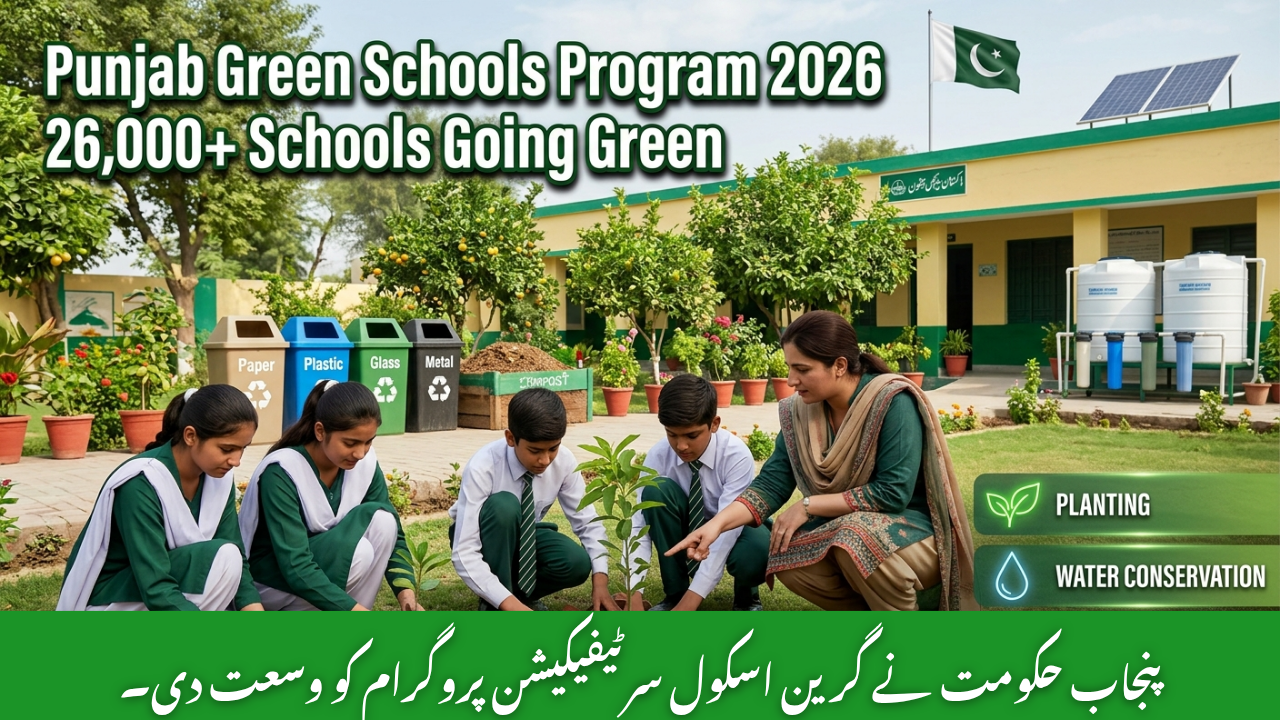
The Punjab Green School Certification Program 2026 marks a major milestone in Pakistan’s push toward environmental sustainability and climate education. Launched and expanded by the Environment Protection and Climate Change Department Punjab, the initiative now reaches tens of thousands of schools across the province, making it one of the largest environmental education programs in South Asia.
As climate change continues to affect regions like Punjab through smog, heatwaves, and water scarcity, the government has taken a proactive approach by targeting schools as centers of awareness and action.
Punjab Green School Certification Program Expansion in 2026
In 2026, the Punjab Green School Certification Program saw a massive expansion in both scope and participation. It now includes more than 26,000 schools across 41 districts, engaging millions of students and teachers in sustainability practices. Public schools make up the majority, but private institutions are increasingly joining as well.
Punjab Green School Certification Program expansion reflects the government’s commitment to embedding environmental responsibility into the education system rather than treating it as an optional subject.
Key Features of the Program
The Punjab Green School Certification Program operates on a structured evaluation system. Schools are assessed on a 100-point scale and awarded ratings from one to five stars based on their environmental performance.
Below is a quick overview:
| Feature | Details |
|---|---|
| Coverage | 26,000+ schools |
| Participants | 7.6 million students & teachers |
| Rating System | 1 to 5 stars |
| Evaluation Criteria | 100-point scoring |
| Key Areas | Air, water, energy, waste, awareness, biodiversity |
Core Environmental Focus Areas
The Punjab Green School Certification Program is built around six essential environmental pillars:
- Air quality improvement
- Water conservation
- Energy efficiency
- Waste management
- Environmental awareness
- Tree plantation and biodiversity
These areas address the most pressing environmental challenges faced by Punjab, especially urban pollution and resource depletion.
Also Read: Pakistan Army Successfully Tests Fateh-II Missile System 2026
Practical Actions in Schools
Unlike theoretical programs, Punjab Green School Certification Program emphasizes real-world implementation. Schools are encouraged to adopt practical measures such as:
- Monitoring and displaying daily Air Quality Index (AQI)
- Installing water-saving devices
- Using solar panels and energy-efficient lighting
- Eliminating single-use plastics on campus
- Establishing recycling and composting systems
- Organizing plantation drives
Such activities not only improve the school environment but also shape students’ long-term habits.
Training and Capacity Building
Teachers play a crucial role in the program’s success. The government, through the Environment Protection and Climate Change Department Punjab, conducts training sessions across major cities including Lahore, Rawalpindi, and Faisalabad.
These workshops equip educators with the tools needed to integrate environmental topics into everyday teaching and school activities.
Why This Program Matters
The expansion of the Punjab Green School Certification Program is more than just a policy move—it’s a cultural shift. By embedding sustainability into schools, the government is nurturing a generation that is environmentally conscious and proactive.
Punjab Green School Certification Program also aligns with global climate goals and demonstrates Pakistan’s commitment to sustainable development.
Official Website
For more details, visit the official portal of the Environment Protection and Climate Change Department Punjab:
https://epd.punjab.gov.pk
FAQs
1. What is the Punjab Green School Certification Program 2026?
It is a government initiative to promote environmental sustainability in schools through a structured certification system.
2. How are schools rated?
Schools are evaluated on a 100-point scale and awarded one to five stars based on performance.
3. Who can participate?
Both public and private schools across Punjab can enroll in the program.
4. What are the main focus areas?
Air quality, water conservation, energy efficiency, waste management, awareness, and biodiversity.
5. Why is this program important?
It helps build environmental awareness among students and contributes to long-term climate resilience.
Conclusion
The Punjab Green School Certification Program 2026 represents a forward-thinking approach to tackling environmental challenges through education. By expanding its reach and focusing on measurable outcomes, the government is ensuring that sustainability becomes a core part of school culture.
If implemented consistently, this initiative could serve as a model for other provinces and countries aiming to integrate climate education into their systems.
Disclaimer
This article is for informational purposes only. While efforts have been made to ensure accuracy, readers are advised to visit the official website for the latest updates and official guidelines.
Related posts:
 Rana Amir Latif Advocate Murder Sargodha – Lawyer Killed Inside Kachehri Chamber 2026
 Medicines Price Increase in Pakistan: Rising Costs and Public Health Concerns 2026
 Pakistan Daily Load Shedding: 2–2.25 Hours Power Cuts During Peak Evening Hours
 Increased PTA Tax iPhone 15 Series Pakistan 2026 – Latest Update & Details
1 thought on “Punjab Green School Certification Program 2026: Punjab Government Expands Eco-Friendly Schools”